Learning how to deploy a digital research repository is an important first step. But what happens after the platform is running? How do you protect the research outputs stored in it, recover information when something goes wrong, or move existing records from another system?
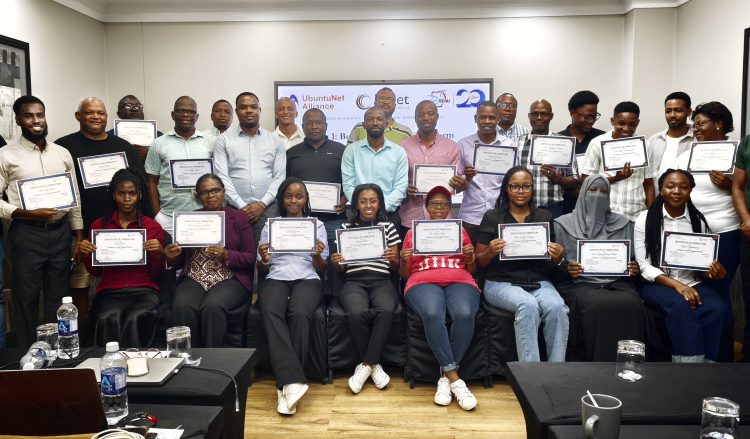
These are some of the technical challenges that MAREN engineers are now better equipped to address following training on a digital platform technically known as DSpace, which institutions use to preserve, organise and share research papers online. The training was held in Harare, Zimbabwe, from 9–13 November 2026
An earlier DSpace training held in Uganda was attended by MAREN Systems Engineers Joyce Mtawali and Jones Kumwenda, who gained practical skills in deploying and configuring digital research repositories. Building on that foundation, a follow-up training in Zimbabwe, attended by Systems Engineer Grace Gausi and Infrastructure Engineer Olivia Mkandawire, focused on securing the platform, managing backups and restoration, and migrating research content from other system.
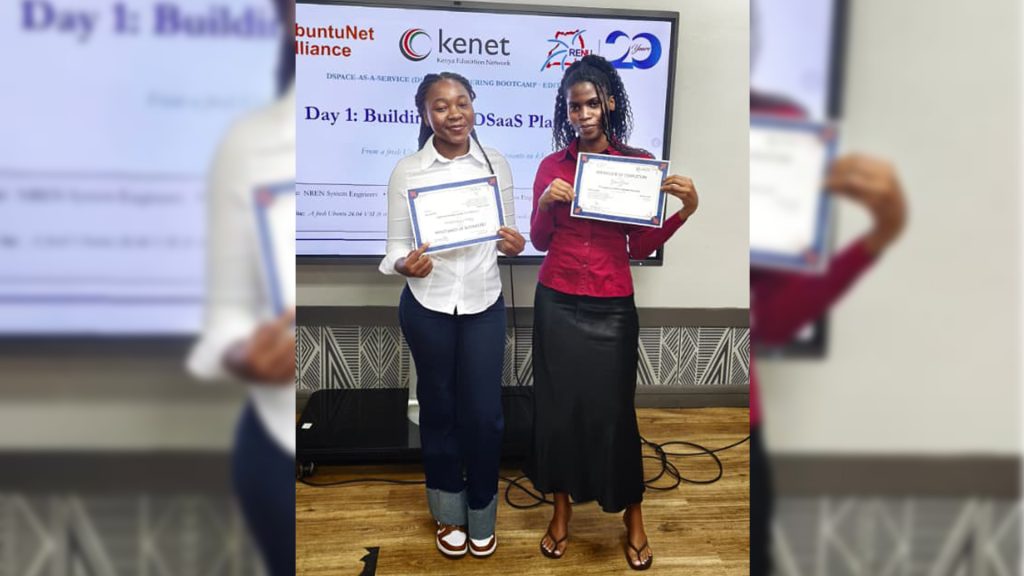
The training forms part of the DSpace-as-a-Service initiative, implemented by UbuntuNet Alliance with support from Invest in Open Infrastructure (IOI).
For MAREN, the training strengthens its capacity to safeguard research information, recover data following technical failures and support institutions migrating from existing platforms.
Through DSpace-as-a-Service, institutions would not need to invest in their own physical server infrastructure or maintain specialist technical teams, allowing them to save on the costs of establishing and maintaining digital repositories. These savings could be directed towards other research and education priorities, while librarians and researchers focus on managing and sharing research outputs.
For Mkandawire, the training also provided an opportunity to learn from other National Research and Education Networks (NRENs).
“Learning how other NRENs are implementing the service has given me practical insights that will inform our approach at MAREN. I also appreciate UbuntuNet Alliance’s efforts to make African research more discoverable, and I hope Malawian institutions will embrace this service for the wider benefit of the country,” she said.
The next step is applying these skills to support the adoption of sustainable digital repositories across MAREN-connected institutions.
Digital Bridges, an Open-Source Innovation Co-Developed by MAREN’s Rexa Mphuwa, Shortlisted for ICTAM Innovation Awards
A village without an internet connection cannot run a speed test. So how can we
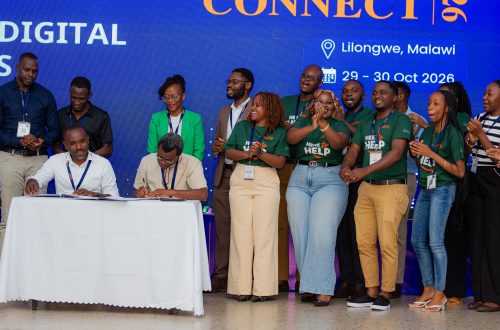
Ubuntu in Action: MAREN and RENU Sign MoU to Advance Research and Education in Africa!
Two countries. Different borders. Shared challenges. One vision. Malawi and Uganda may be separated by
