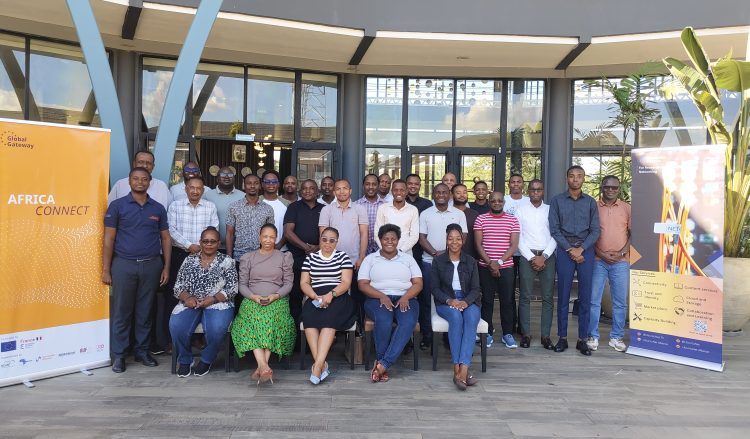
The Malawi Research and Education Network (MAREN) has strengthened its cybersecurity capacity following participation in a regional cybersecurity training organised by UbuntuNet Alliance in partnership with the European Union under the AfricaConnect4 Project.
Held in Lilongwe from the 11 to 15 May 2026, the five-day training brought together cybersecurity professionals and IT personnel from National Research and Education Networks (NRENs) across Southern and Eastern Africa, including Malawi, Kenya, Uganda, Tanzania, Zambia, Zimbabwe, South Africa, Ethiopia and Mozambique. MAREN was represented by Samuel Loga, Cybersecurity Engineer, and Olivia Mkandawire, Network Infrastructure Engineer.
The training focused on strengthening cybersecurity skills in response to growing cyber threats targeting research and education institutions. Key areas covered included foundational cybersecurity concepts and intelligence gathering, application and wireless security, mobile and cloud security, DNS and Active Directory security, infrastructure and database security, security monitoring, threat hunting, and emerging threats related to artificial intelligence (AI).
Speaking on the significance of the training, Samuel Loga said the sessions provided practical exposure to cybersecurity challenges and solutions being implemented across institutions within the region.
“The training provided practical knowledge and exposure to real-world cybersecurity challenges and solutions being implemented across different organizations within the region. The peer discussions also offered valuable insights into best practices, operational strategies, and collaborative approaches to improving cybersecurity resilience,” said Loga.
“The knowledge gained will contribute towards improving MAREN’s security operations to effectively protect systems, infrastructure, and data,” he added.
The training also highlighted the importance of adopting international cybersecurity standards, improving continuous monitoring systems, and strengthening incident response mechanisms within institutions. Participants further explored emerging risks associated with artificial intelligence and the growing need for responsible and secure use of AI technologies.
Beyond the technical sessions, the training created a platform for regional collaboration and knowledge sharing among cybersecurity professionals from across Africa, supporting coordinated efforts to address common cybersecurity challenges affecting research and education networks.
The skills and recommendations from the training are expected to contribute towards strengthening cybersecurity awareness, improving institutional security policies, and enhancing the protection of research and education infrastructure in Malawi.
Beyond Power Outages: MAREN Equips Southern Region Institutions for Resilient, Seamless Campus Connectivity
Imagine a lecturer, hours away from submitting an important research grant application. The proposal is

MAREN Engineers Take Home-Grown Expertise to UC2026 Regional Stage
It starts with the work happening quietly behind the internet connections students, lecturers and researchers
