A student from one university connecting securely to Wi-Fi while visiting another. A researcher accessing online academic resources such as Research for Life, Okeanos or Emerald Insight, anywhere without having to create a new account for each platform.
These are some of the possibilities that eduroam and federated identity management can help unlock for Malawi’s research and education community.
MAREN has strengthened the technical capacity needed to deploy and manage these services, which can make it easier and more secure for students, researchers and staff to access digital resources using their institutional credentials within campus and beyond.
The new knowledge follows a series of AfricaConnect-supported capacity-building initiatives that have strengthened different areas of MAREN, including financial management and cybersecurity. This time, the focus was on the infrastructure that enables seamless access to digital services.
MAREN Systems Engineers Jones Kumwenda and Grace Gausi attended a five-day Federated Identity Management and eduroam Workshop in Kampala, Uganda, from 17 to 21 August, 2026.
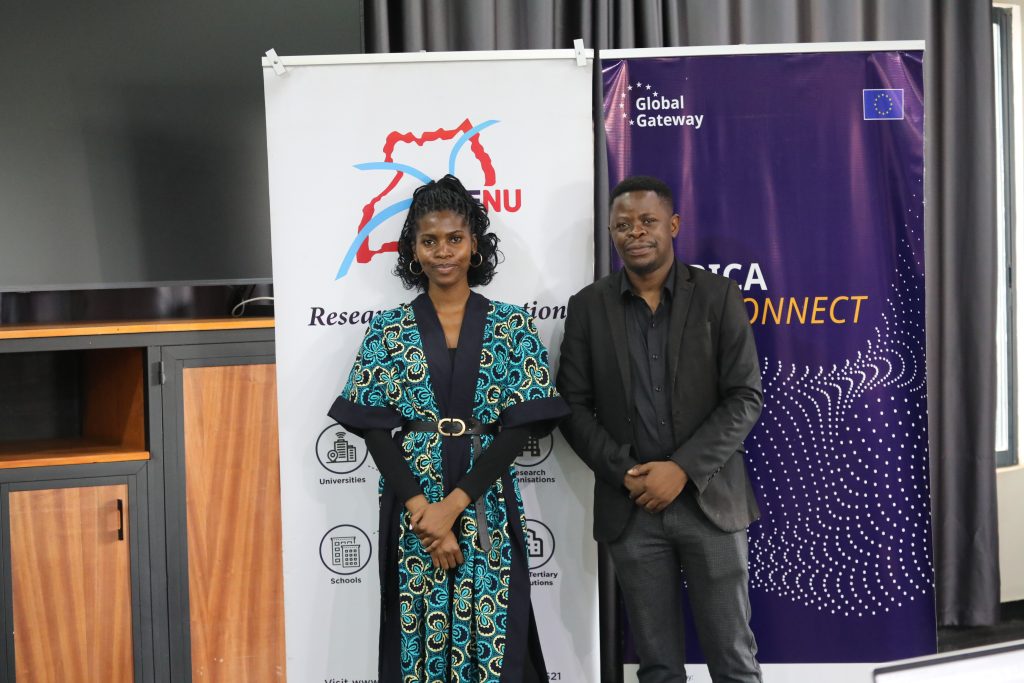
The training strengthened their practical understanding of the systems required to manage digital identities and authenticate users across different services and institutions. This will support MAREN as it continues to strengthen the infrastructure behind its identity federation and eduroam services.
For member institutions, the outcome could mean easier and seamless access to a growing range of shared services. Instead of managing separate accounts for every platform, users can use their institutional credentials to access participating services.
It also strengthens the foundation for eduroam, the global Wi-Fi roaming service for the research and education community. Through eduroam, students, researchers and staff can connect securely to participating Wi-Fi networks using credentials from their home institutions.
For Gausi, however, one of the most valuable outcomes extended beyond the technical sessions.
“Technical sessions provide the knowledge, but conversations with other engineers help put that knowledge into perspective. Hearing about what other organisations have achieved and the projects they are working on can spark new ideas and challenge assumptions about what is possible,” she said.
The knowledge gained will be applied within MAREN and shared with member institutions through technical support, knowledge sharing and future capacity-building activities.
As the systems behind digital access continue to strengthen, the impact could extend well beyond a simpler sign-in or Wi-Fi connection, helping Malawi’s research and education community participate more easily in the shared services and collaborations available across the region and the world.
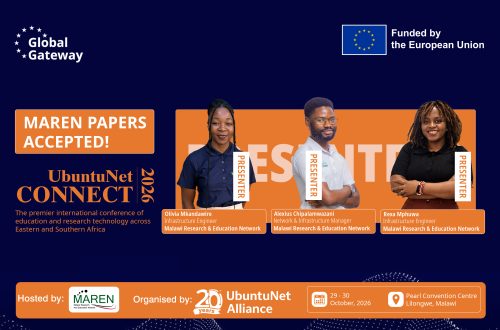
MAREN Engineers Take Home-Grown Expertise to UC2026 Regional Stage
It starts with the work happening quietly behind the internet connections students, lecturers and researchers
MAREN and Librarians Build a Stronger Pathway for Malawi’s Research
Knowledge becomes more powerful when it can travel. For Malawi’s universities and research institutions, getting
